
How to Find a True SMM Provider: Spot Sources, Avoid Resellers
Learn to distinguish a true SMM provider from a reseller panel. This guide covers the key criteria, red flags, and pricing models to help you buy services smarter.
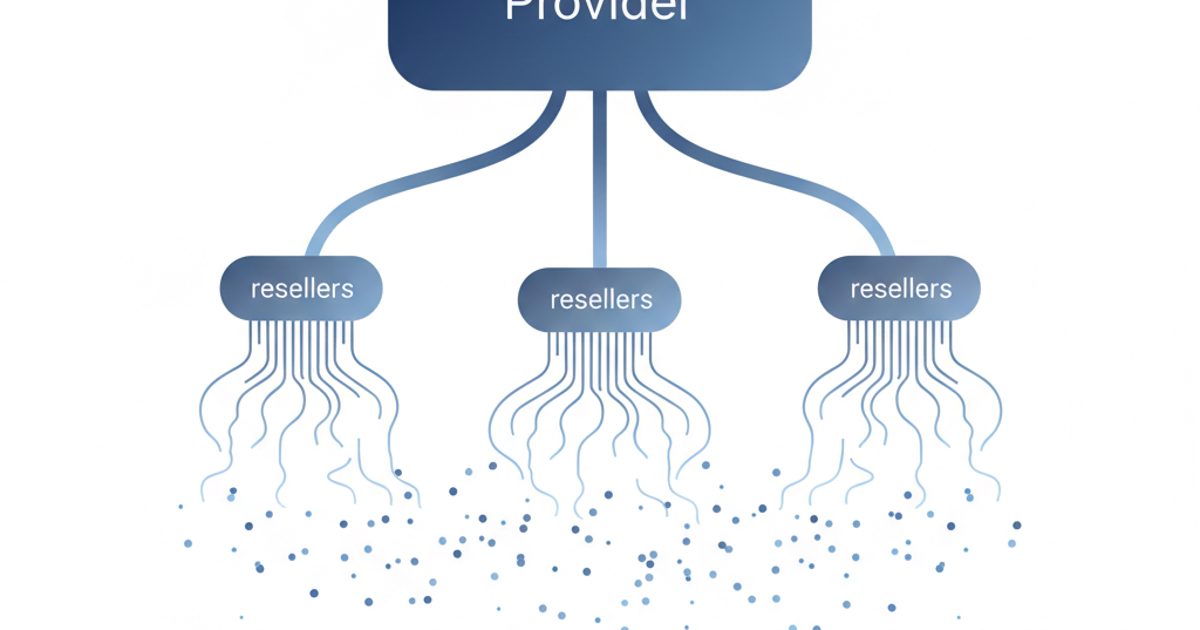
An SMM provider is the direct source of automated social media services, operating the infrastructure that generates views, followers, or likes. With over 5.04 billion social media users worldwide as of early 2024, the demand for these services is enormous. Prices for basic services like TikTok views can start as low as $0.01 per 1,000.
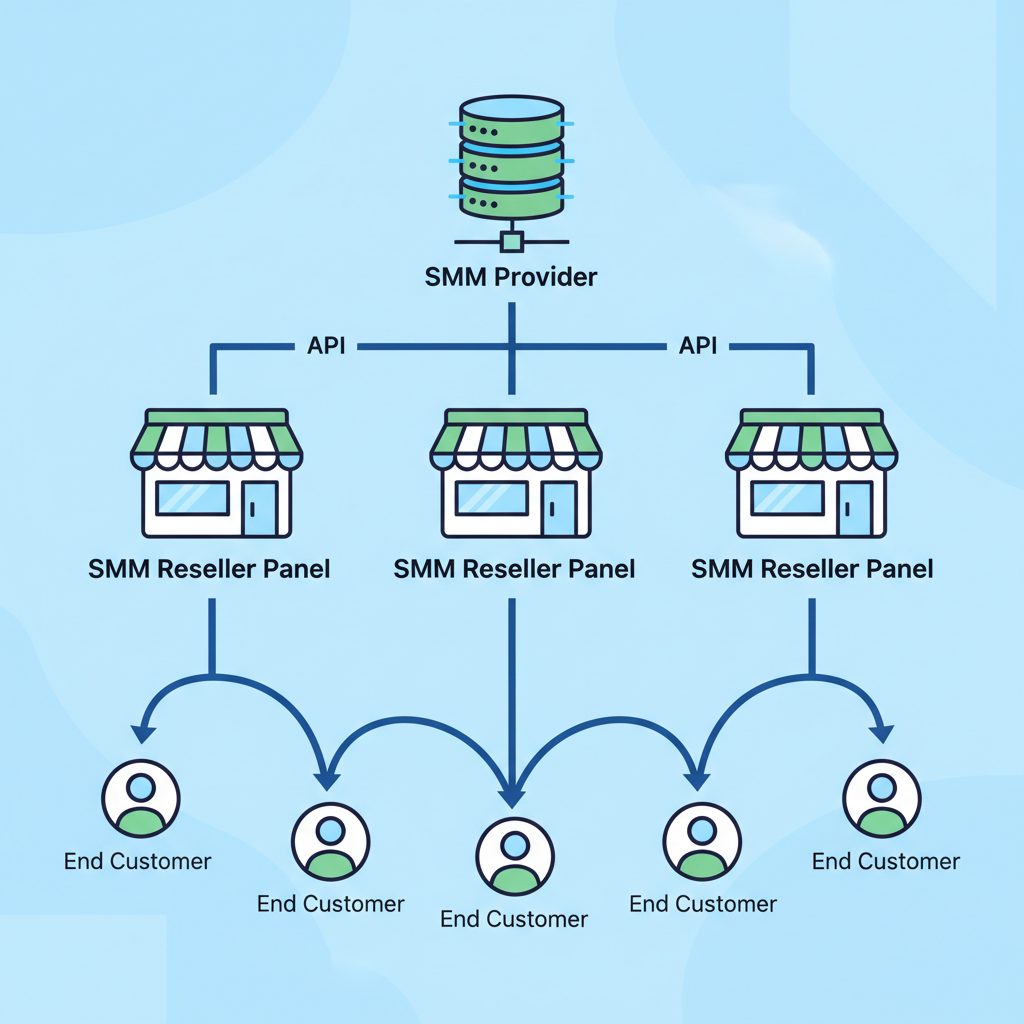
Knowing the difference between a direct provider and a reseller is essential for managing costs, delivery speed, and risk. A true provider controls the delivery infrastructure and sells services to other panels through an API. This direct control allows them to offer the lowest prices and fastest service speeds, cutting out reseller markups.
SMM Provider: The direct source or "manufacturer" of automated social media services, such as views, likes, or followers. A provider operates the technical infrastructure that generates these interactions.
Why it matters: Identifying a true provider is key to getting the lowest prices and fastest service. Most SMM panels are resellers who buy from providers and add a markup, so buying direct cuts out the middleman.
Key Takeaways
- Identify the source: A true SMM provider runs the service infrastructure. In contrast, most SMM panels are simply resellers marking up a provider's service.
- Evaluate on technicals, not hype: Judge providers on API availability, service ID stability, and support depth, not just on price or vague terms like "high quality."
- Price is a signal: The cheapest service is often from a provider, but not always. The key is to find the price floor for a specific service type, which indicates the source.
- Manage risk actively: All SMM services violate platform terms of service. Reduce risk by using high-retention services, starting with small orders, and avoiding services for your primary business accounts initially.
- Start with a directory: Use a vetted directory to compare providers and panels, check user reviews, and filter services before committing funds.
What Is an SMM Provider and How Do They Differ from Panels?
In the SMM service market, not all sellers are equal. The distinction between a provider and a panel defines the entire supply chain. Misunderstanding this difference is the most common reason buyers overpay for low-quality services.
Providers often do not have a user-friendly website for single orders. Their main business is selling in bulk to other panels via an Application Programming Interface (API).
SMM Panel (Reseller): An SMM panel is a retail storefront. The vast majority of sites calling themselves "SMM panels" are resellers. They connect to providers through an API and import their service lists. Then, they add a percentage markup and present the services to end-users in a clean interface.
When a user places an order, the reseller panel simply forwards the request to the upstream provider and pockets the difference.
The SMM market is a chain of APIs. A large provider might sell to a few dozen large panels, who in turn sell to hundreds of smaller panels, each adding a small markup. The price you pay is often determined by how many resellers are between you and the original provider.
Finding a seller closer to the source means lower prices, faster start times, and more knowledgeable support. A reseller's support can only relay the status their provider gives them. In contrast, a true provider's support can often diagnose and fix the underlying technical issue.
Where SMMDir's Directory Fits
SMMDir is not an SMM provider or a reseller panel. We do not sell followers, likes, or views. Our role is to provide a transparent directory and review platform for the SMM industry. We aggregate data on hundreds of panels and providers to help you make an informed decision.
The SMM Panel Directory lists services, starting prices, user reviews, and key metrics like a panel's age and payment methods. This data allows you to compare multiple sellers side-by-side and filter out untrustworthy options. For buyers who want to research the market before depositing funds, a directory is the logical first step. However, if you are looking for a single recommendation, a directory's purpose is different; it provides data for you to make your own choice.
How to Evaluate an SMM Provider: 7 Critical Criteria
Identifying a true provider requires looking past the website's marketing and examining its technical and business model signals. A reseller can build a professional-looking site, but they cannot fake the underlying infrastructure of a provider.
Here is a comparison of what to look for:
| Criterion | True SMM Provider | SMM Reseller Panel |
|---|---|---|
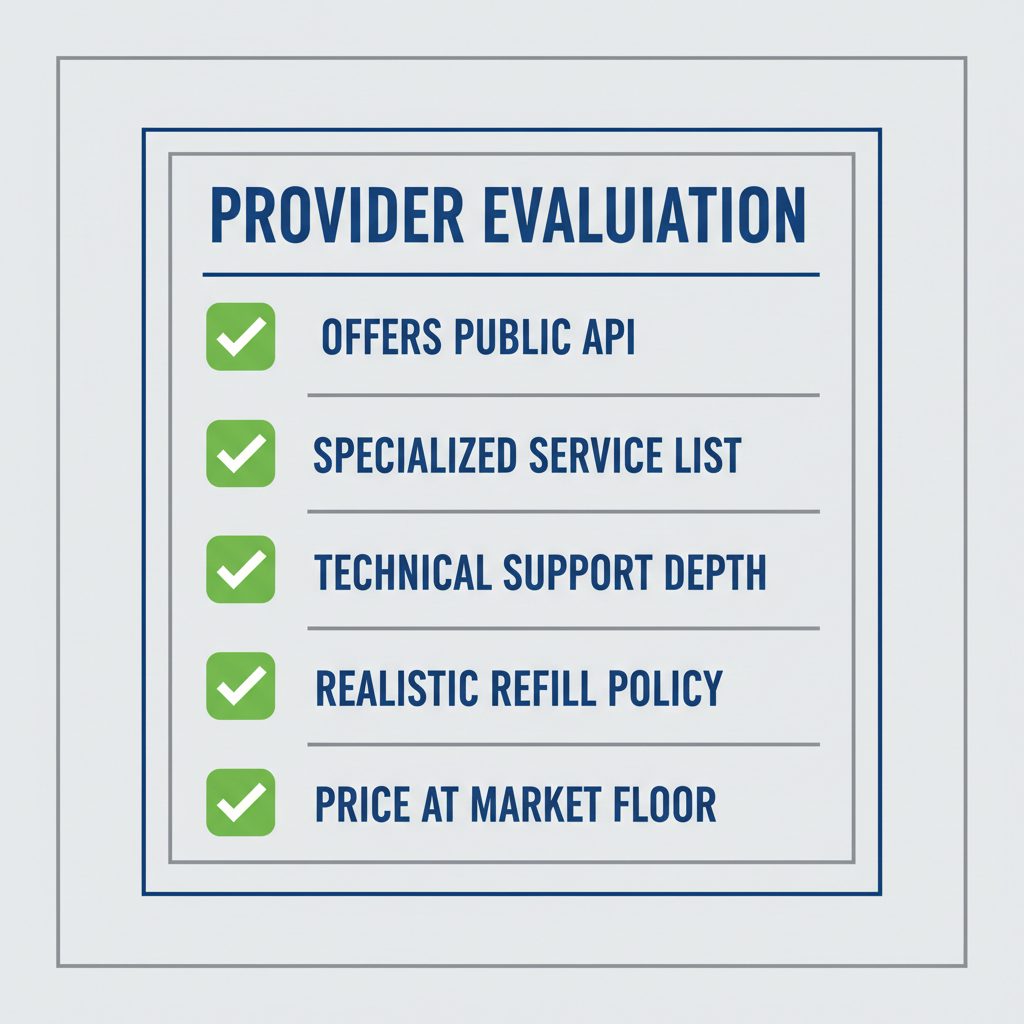
| API Access | Offers a public API for other panels to connect | Consumes an API from one or more providers |
| Service Pricing | Usually the lowest price for a specific service ID | Provider's price plus a markup (5-500%) |
| Support Depth | Can resolve technical service faults directly | Can only check order status and escalate to their provider |
| Delivery Speed | Near-instant start time for most automated services | Can have a slight delay due to API call latency |
| Service Portfolio | Often specializes (e.g., only YouTube or Telegram) | Offers a huge, diverse catalog from many sources |
| Minimum Funds | May require a high initial deposit ($100+) for API access | Low minimum deposit ($1-10) for end-users |
| Service ID Consistency | Owns and maintains a stable list of service IDs | Service list may change as they switch providers |
Analyzing these criteria helps you diagnose a seller's position in the supply chain. For example, if a panel offers thousands of services across every platform, from Pinterest to LinkedIn SMM Panel services, it is almost certainly a reseller aggregating multiple providers.
A true provider often has a much narrower, deeper focus on platforms they have successfully automated. This could include specific services for Instagram panels.
What Are Common Red Flags to Watch For?
New buyers often fall for the same deceptive marketing tactics. Spotting these red flags can save you from wasting your budget on services that are guaranteed to fail.
- Vague Service Descriptions: Terms like "High-Quality," "Premium," or "Real" are meaningless without specifics. A professional provider will specify the retention rate, drop guarantee, refill window (e.g., 30 days, 90 days), and estimated start time.
- "Lifetime" Guarantees: No one can guarantee a service for a lifetime. Platforms constantly update their systems and purge accounts. A "lifetime" refill policy often means the lifetime of the panel, which may only be a few months. A 30 or 60-day refill is a more realistic promise.
- Unrealistic Prices: While providers are cheap, some prices are too good to be true. For instance, a panel offering 1,000 Instagram followers with a "lifetime guarantee" for $0.50 is selling a service that will disappear within hours. Compare prices for similar service types across multiple panels to establish a realistic baseline. Our guide to the cheapest SMM panels explains how to analyze price versus risk.
- Forced Pre-payments: Avoid panels that require a large deposit before you can even browse their service list. A transparent seller shows you what they offer and at what price before you commit.
- Ignoring Platform Rules: Using automated services to boost engagement is against the terms of service of all major social platforms.
YouTube Fake Engagement Policy: "YouTube doesn't allow artificial or fake engagement that makes it seem like your content is more popular than it really is. We also don't allow content that exists for the sole purpose of gathering engagement from viewers." - YouTube Help Center
Any provider claiming their service is "100% safe" or "undetectable" is lying. The risk of account suspension or content removal is always present, though it varies by platform and service type.
What Realistic Results Can You Expect?
SMM services are a tool for a specific job: creating social proof and overcoming initial credibility gaps. They are not a tool for building a genuine community or driving qualified sales leads.
The Good: Social Proof and Unlocking Features
A new channel with 10 subscribers and 5 views per video struggles for credibility. A visitor has no reason to believe the content is worth their time. Boosting those videos to 1,000+ views and the channel to 500+ subscribers provides a baseline of social proof. This makes the next organic visitor more likely to watch the content instead of immediately clicking away.
This strategy taps into the massive and growing creator economy. Goldman Sachs research projects the market could reach $480 billion by 2027. For some platforms, metrics can also grant access to features like adding links in stories or qualifying for partner programs.
The Bad: No Real Engagement or Reach
These are not real people who will engage with your future content. The views are from bots or incentivized users who have no interest in your topic. Therefore, do not expect them to comment, buy your products, or become loyal fans. The engagement is surface-level.
Platforms like Meta are explicit in their fight against this activity.
Meta's Inauthentic Behavior Policy: "We want to make sure the content people see on our platforms is authentic. ... This includes artificially inflating the popularity of content, or content that is designed to mislead people about its origin." - Meta Transparency Center
The Ugly: Drop Rates and Account Risk
Services will drop. A "drop rate" is the percentage of followers, likes, or views that get removed by the platform over time. A good provider offers a service with a low drop rate and a "refill" window. For example, if you buy 1,000 followers and 300 drop within a week, a panel with a 30-day refill policy should replace them for free. A cheap, no-guarantee service will not.
Your Next Move
- Define Your Goal. Are you trying to add a credibility floor to a new account, or are you trying to hit a specific metric for a client? The goal dictates the type of service you need.
- Start with a Test. Never place a large order with a new provider. Start with the smallest possible order on a non-critical account. Test a few different services to see which one has the best retention.
- Track Everything. Log the date, service ID, quantity, start count, and end count. After 7, 14, and 30 days, check the drop rate. Only after you have this data should you consider using the service on an important account.
- Use a Directory for Research. Before you deposit money anywhere, use a resource like the SMM Panel Directory to check reviews, compare prices, and see how long the panel has been operational. The most expensive mistake is choosing the wrong provider.
Frequently Asked Questions
Is using an SMM provider safe?
No SMM service is 100% safe, as it violates platform terms of service. Risk depends on the service quality, order volume, and the platform itself. Passive metrics like views are generally lower risk than active ones like followers or comments. Always test on a non-critical account first.
Who is the main SMM provider?
There is no single "main" provider. The market is fragmented, with dozens of large, specialized providers. One might be the source for YouTube views, another for Telegram members, and a third for TikTok likes. Many focus on one platform they have mastered.
How much does an SMM provider cost?
Prices vary dramatically. Low-quality TikTok views can be less than $0.01 per 1,000. High-retention Instagram followers from a specific country can cost $10 or more per 1,000. The price is determined by the service's complexity, retention, and targetability.
Can I get banned for using SMM services?
Yes. It is a direct violation of all major social media platforms' policies against inauthentic engagement. While outright bans for buying views are rare, platforms can remove the purchased metrics, delete your content, or place restrictions on your account.
What's the difference between a provider and a panel?
A provider is the direct source that creates and runs the service infrastructure. A panel is typically a reseller storefront that buys services from one or more providers via API, adds a markup, and sells them to end-users.
How do I find a real SMM provider?
Look for technical signals: they offer an API for other panels, have deep expertise in a few specific platforms rather than offering everything, and their support can handle technical questions. Using a directory with reviews, like the SMM Panel Directory, helps you sift through resellers and identify potential sources.